
BUY TICKETS HERE TODAY!
(Online Tickets are available until 6PM on the night of the show. All remaining tickets will be sold at the Door at 7:30PM)
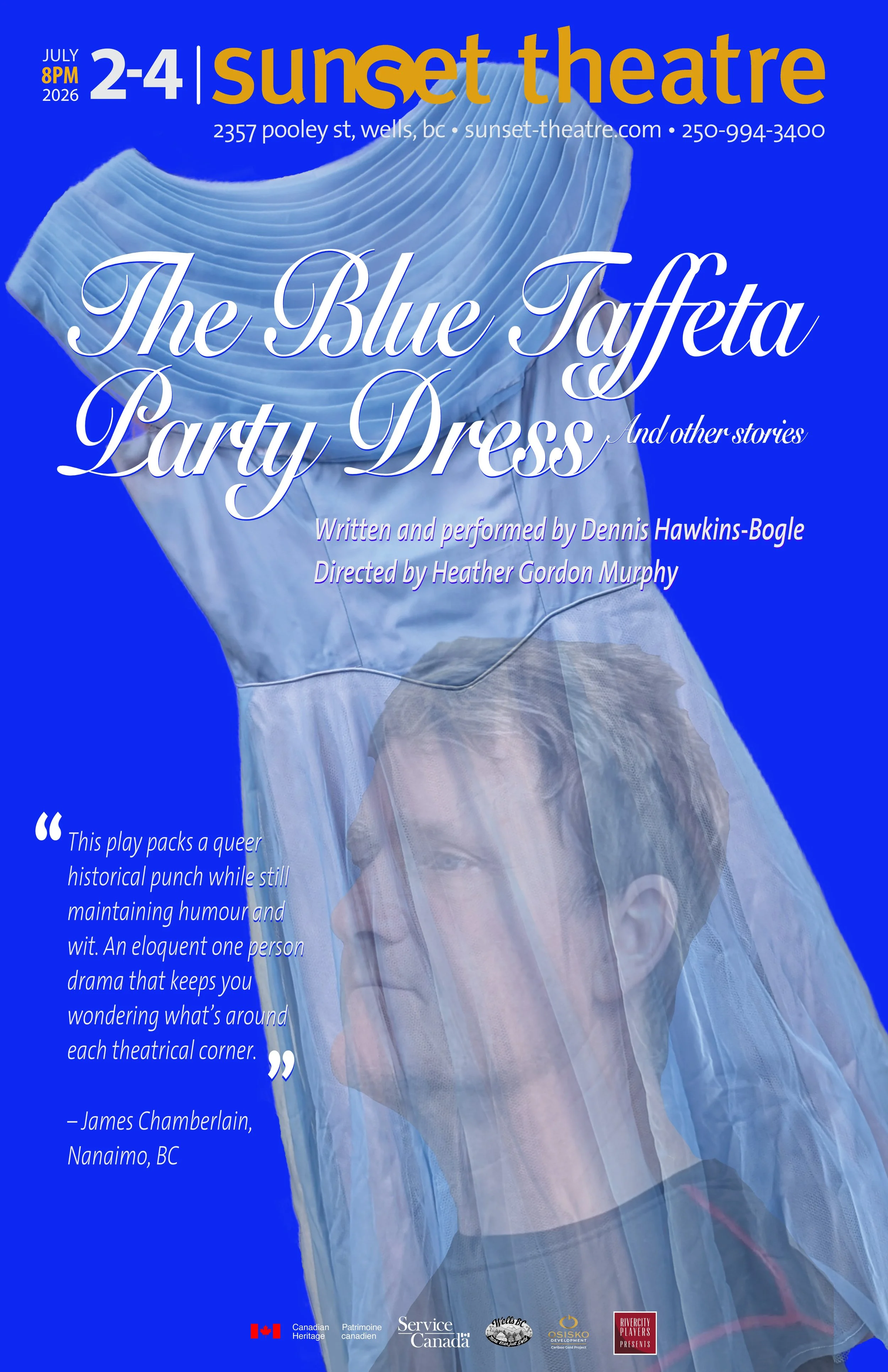
Join us for The Blue Tafetta Party Dress on July 2nd, 3rd and 4th @ 8PM.
Running Time: 70 Minutes, 2 Acts (each act is 35 to 40 minutes) One 15 minute intermission.
“This play packs a queer historical punch while still maintaining humour and wit. An eloquent one-person drama that keeps you wondering what’s around each theatrical corner.” - James Chamberlain, Nanaimo, BC, Founding Member of GALE (Gay & Lesbian Educators)
On July 2, 3 and 4, 2026 the Sunset Theatre in Wells is proud to present a very personal coming of age story created by a Quesnel born writer, performer and retired teacher/principal.
The Blue Taffeta Party Dress & Other Stories is a solo performance written and performed by Dennis Hawkins-Bogle, and tells the story of one man’s coming of age journey from childhood to his life as the principal of the high school he graduated from.
ABOUT THE PLAY
Set in a small northern town in the 1970s, this is more than a coming out story. It’s a raw, honest, and often wry journey through the psyche, the politics, and the pressures of a time that had little room for difference. Playwright and Performer, Dennis Hawkins-Bogle shares, “As a gay kid growing up in an era of silence and shame, my voice was misrepresented, undermined, even sensationalized by the dominant culture. Now, I’m setting the story straight — through moments of resilience, humour, heartbreak, and hope. This is a story about choosing authenticity over fear, joy over judgment, and community over isolation. It’s not just about coming out. It’s about coming into a life fully lived.”
Directed by Campbell River resident, Heather Gordon Murphy, Dennis’ play is a collection of autobiographical stories about coming of age in an era of silence and shame.
The Blue Taffeta Dress & Other Stories will be presented at the Sunset Theatre in Wells for three nights: Thursday, July 2nd through to Saturday, July 4th. The play runs 70 minutes in 2 Acts with one 15 minute intermission. This show contains mature content is suited for an audience over the age of 16 years old.
About the Playwright / Performer
Dennis Hawkins-Bogle (last at the Sunset in 2024, with Where is Grise Fiord?), returns with a collection of autobiographical stories about growing up gay in small-town northern BC.